
The Only Step in My Productivity System I Still Do by Hand
AI Took the Catching, the Sorting, and the Weekly Review. The Work Is Still Mine.

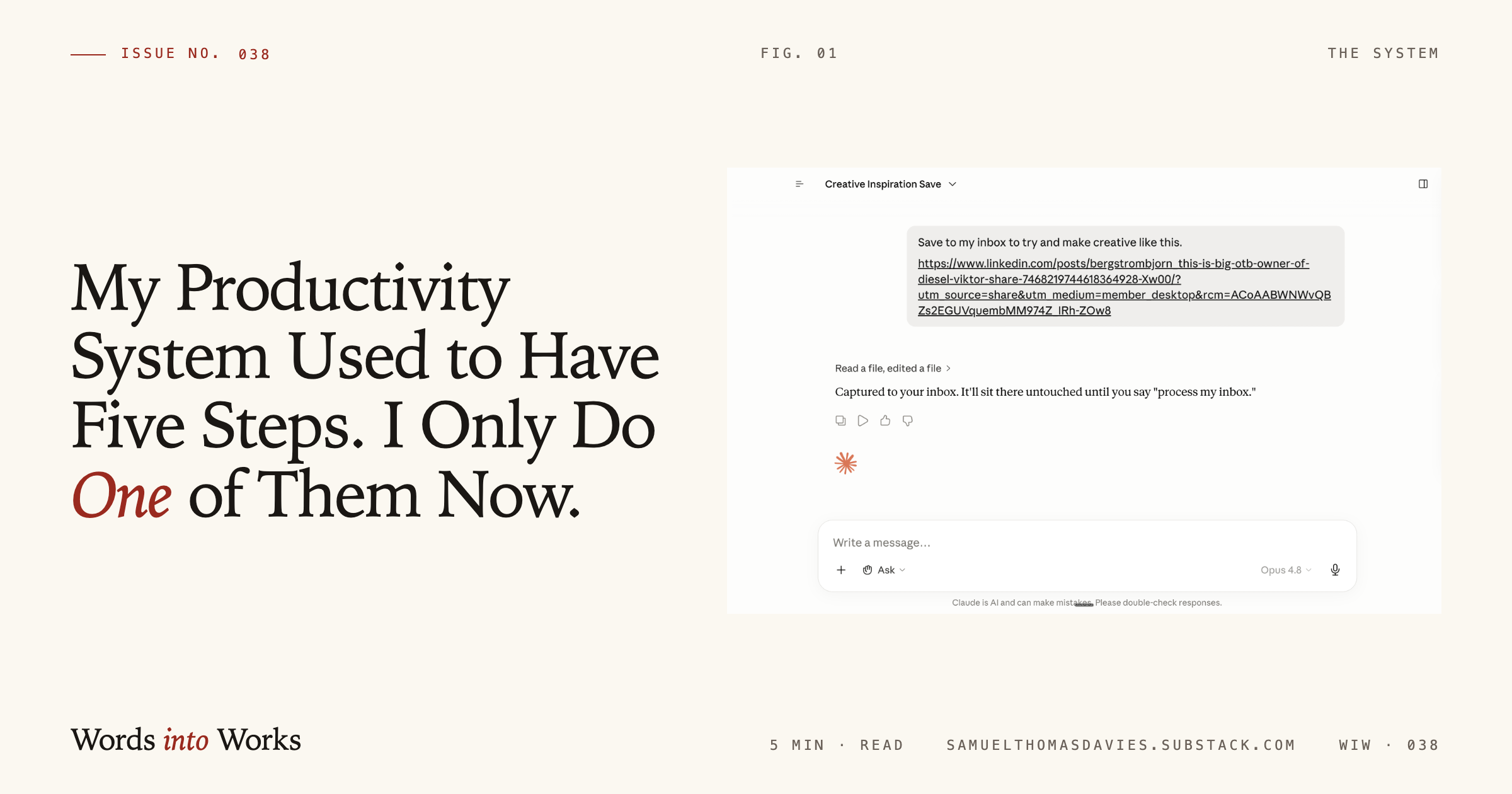
This morning I was half-reading LinkedIn when a post stopped me. Björn Bergström, writing about the brand behind Diesel, with a creative format I wanted to steal for Dreem.

Six months ago that would have cost me a small ritual. Open Notion. Find the right database. Decide whether it's a task or an idea or just a maybe. Title it properly. Paste the link. Write enough context that future me wouldn't stare at it blankly.
Instead I typed one line to Claude, "Save this to my inbox," and pasted the link.
Done. Filed with the source and a note in my own words. I kept scrolling.
That used to be a string of separate decisions. This morning it was one sentence, and I made it without looking up from the feed.
If you run any kind of system to keep track of your work, you've performed that little ritual thousands of times.
Today, I want to show you what happens to it when something else runs the steps.
The Tax You Stop Noticing
For years I ran David Allen's Getting Things Done system in Notion, by hand. (If you don't know GTD, you know a version of it: you catch everything, clarify it, file it, review it, and do it. Five steps.)
It worked. And I trusted it. After all, that's the whole point of a system you've run for years: you stop questioning it.
But trust hid a cost.
I was the engine. Every input had to be caught by me, clarified by me, filed by me, resurfaced by me at the right moment, then done by me. Five steps, and I was every one of them.
Most days that's fine. The tax is small per transaction. (Thirty seconds to file a thing. A few minutes to triage. Twenty minutes on a Sunday to review.)
But it's the volume that gets you. A hundred small rituals a week, each one a tiny act of admin standing between you and the actual work.
And the volume only climbs.
AI was supposed to take work off our plates. In reality, it's mostly raised the bar.
Every team I know is expected to move faster and run more in parallel now, because the tools made it look easy.
In truth, we're probably doing more than we ever have, which means there's more to catch, more to sort, more to resurface.
In my experience, the engine was always me, and that engine was getting buried.
What's Left After the Collapse
I didn't reorganize my system. In fact, I stopped running most of it. What used to be five steps is three now, and I only do the last one by hand.
It starts with catching. I have one inbox, a plain text file, append-only, that spans both my Dreem work and my Creative Force work.
Take the post from this morning, for example. I told Claude to save it to my inbox, which it did, and it then told me it would sit there untouched until I said the word:
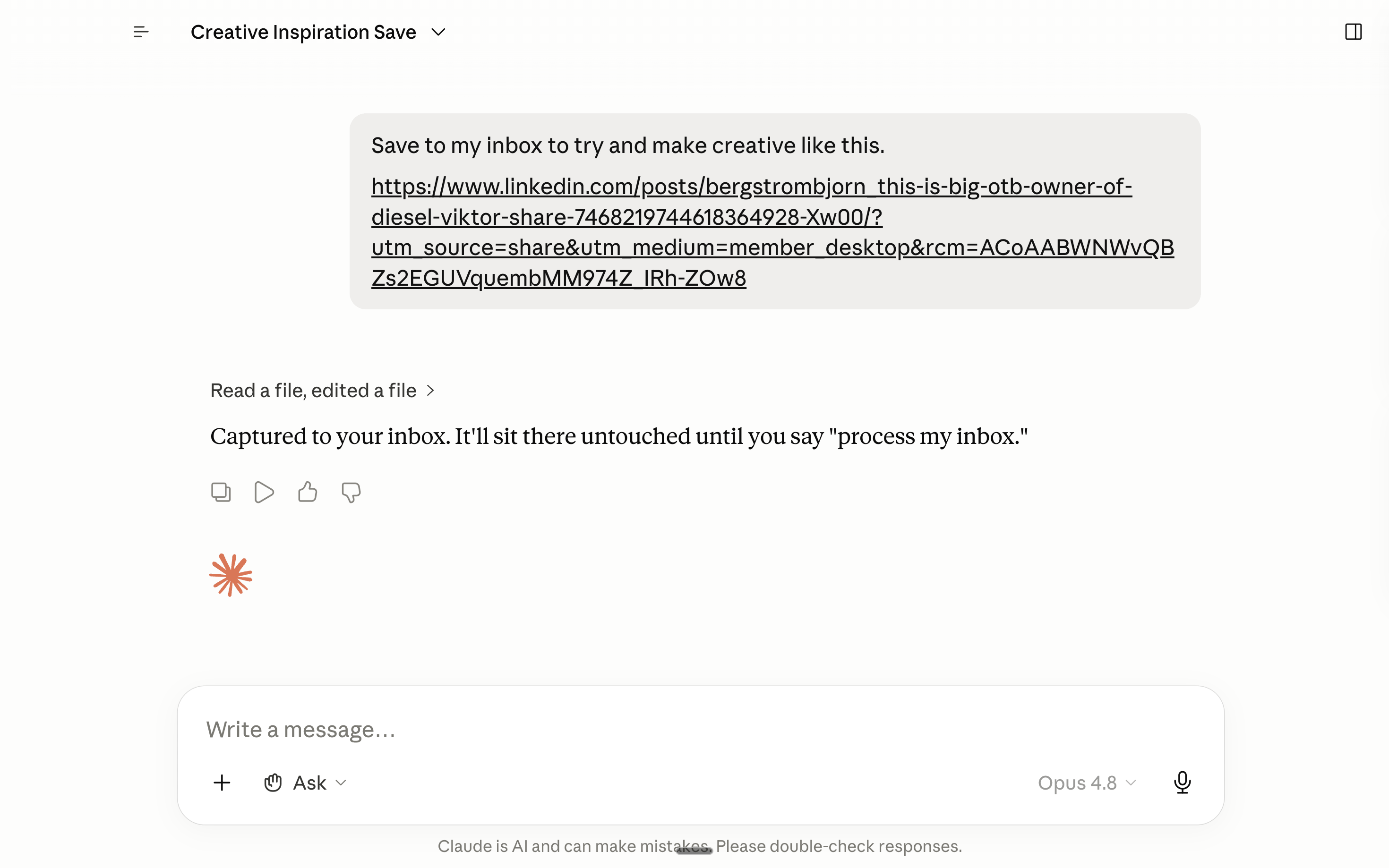
What that reply doesn't show is the line it wrote into the file, in the exact format my system uses:
[2026-06-05] Try to make creative like this LinkedIn post | source: linkedin.com/posts/bergstrombjorn... | hunch: Björn Bergström post re OTB (owner of Diesel) — a creative format worth replicatingThe date, the source, the note in my own words, all from the one line I tossed it. Whatever I hand it, it keeps, structured and filed in the format my system uses, while I do nothing.
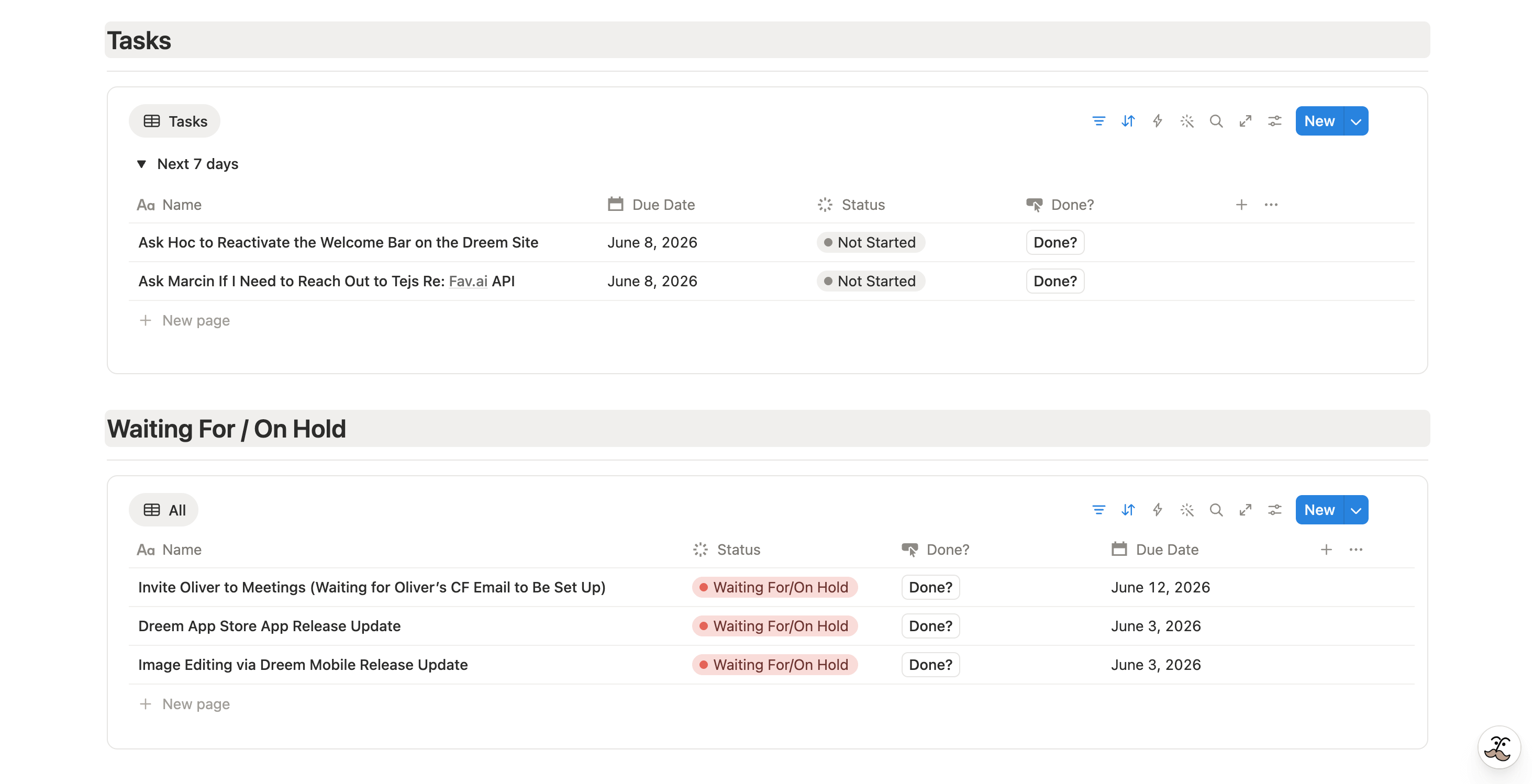
When something's a clear commitment rather than a maybe, I skip the inbox. “Add to tasks,” I write, and Claude writes it into my Tasks database in Notion with full context in the page. Catch, clarify, route, one sentence. Things go to Tasks, to Backlog, or get marked Paused when they're on hold or waiting on someone else.
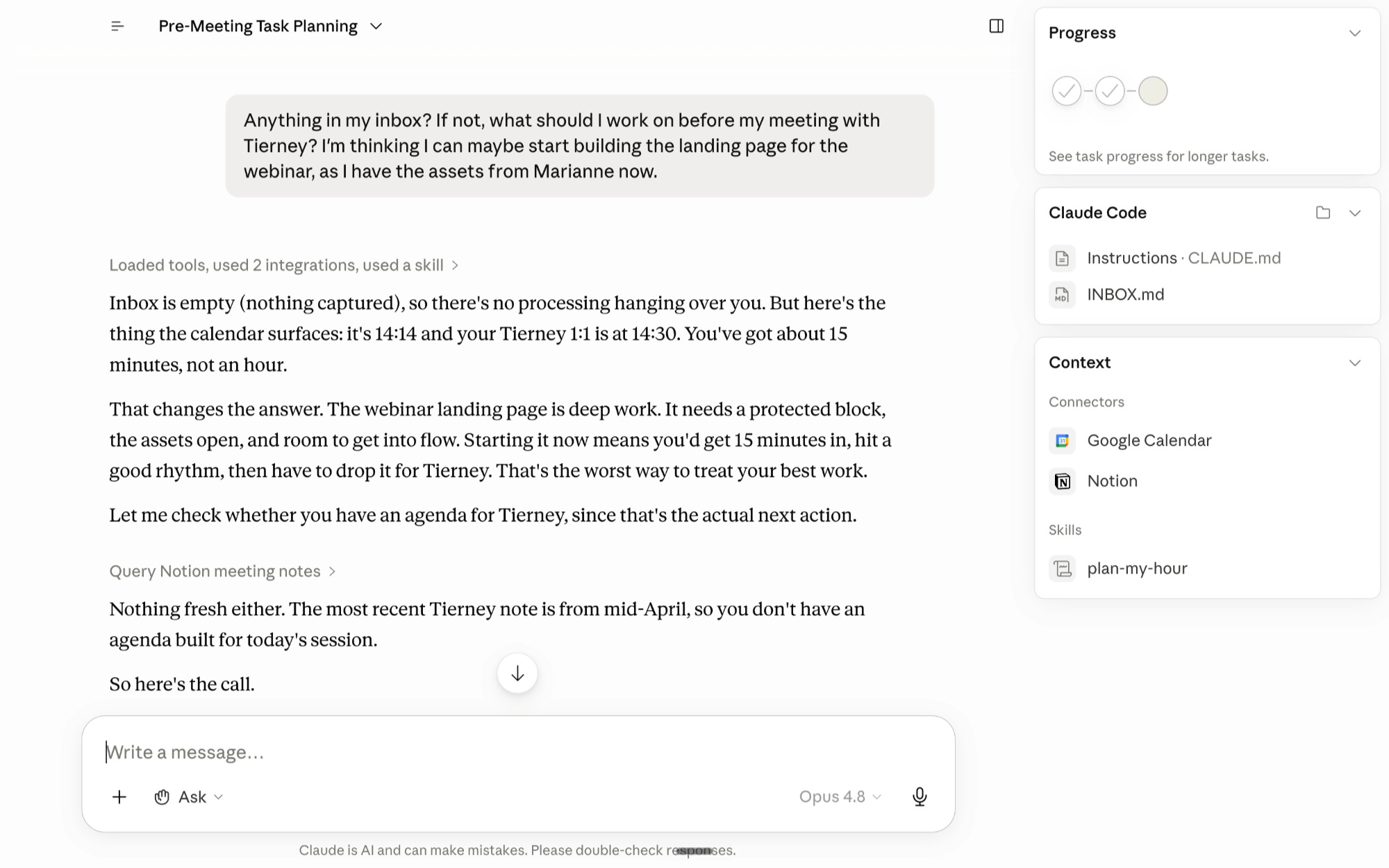
The second part used to be a weekly ritual. Every Sunday I'd sit down and review the whole system. I don't anymore. Now it happens on demand. For example, last week I asked what to start before a 1:1 with a colleague and Claude floated a webinar landing page I needed to build. It checked my calendar, caught that I had fifteen minutes, not the hour I'd assumed, and talked me out of it.
Which leaves the one step that never moved. The doing. Nothing files the work for me, sits in the meeting for me, or makes the call. The collapse stops exactly where the real work starts.
Which is right where I want it.
Granted, my system isn't seamless, and I won't pretend it is; it's only as good as what I hand it. A clear note routes itself. A lazy one ("look into the pricing thing") still has to be clarified later, by me or by Claude asking what I meant. The collapse needs the context there at the moment of capture; without it, the sorting just moves downstream.
Make It Yours
Today's skill is the routing layer I built to do this. It turns add this to tasks into a correctly-filed, correctly-tagged entry without me touching Notion or my calendar. It's inspired by GTD principles (though it's not affiliated with or endorsed by the David Allen Company), and it's wired to the way I name things, not the book's.
Rather than rebuild my system, look at your own, and find the steps you're still doing by hand. Pick the one you repeat most often (the filing, the sorting, the Sunday review) and hand that one to Claude this week. Then see what collapses.
The ritual I described at the top, open Notion, decide, title, paste, context, I haven't done it in months. If this made you notice your own version of it, send it to someone who's still doing all five steps by hand.
Grab the routing skill below.
