
I Spent 10 Years Writing Book Summaries. They're All Useless Now.
What Changed: Claude Cross-Referenced My Reading List With Our Conversations and Found the Books I Actually Use

Welcome to Words Into Works. Each week, I share how I’m using AI to turn what I already have—copy, meeting transcripts, book highlights—into something I can actually use. If you’re a knowledge worker who’s ever had everything you need but couldn’t pull it together, this newsletter is for you. Paid subscribers get every prompt, Claude skill, and workflow I build.
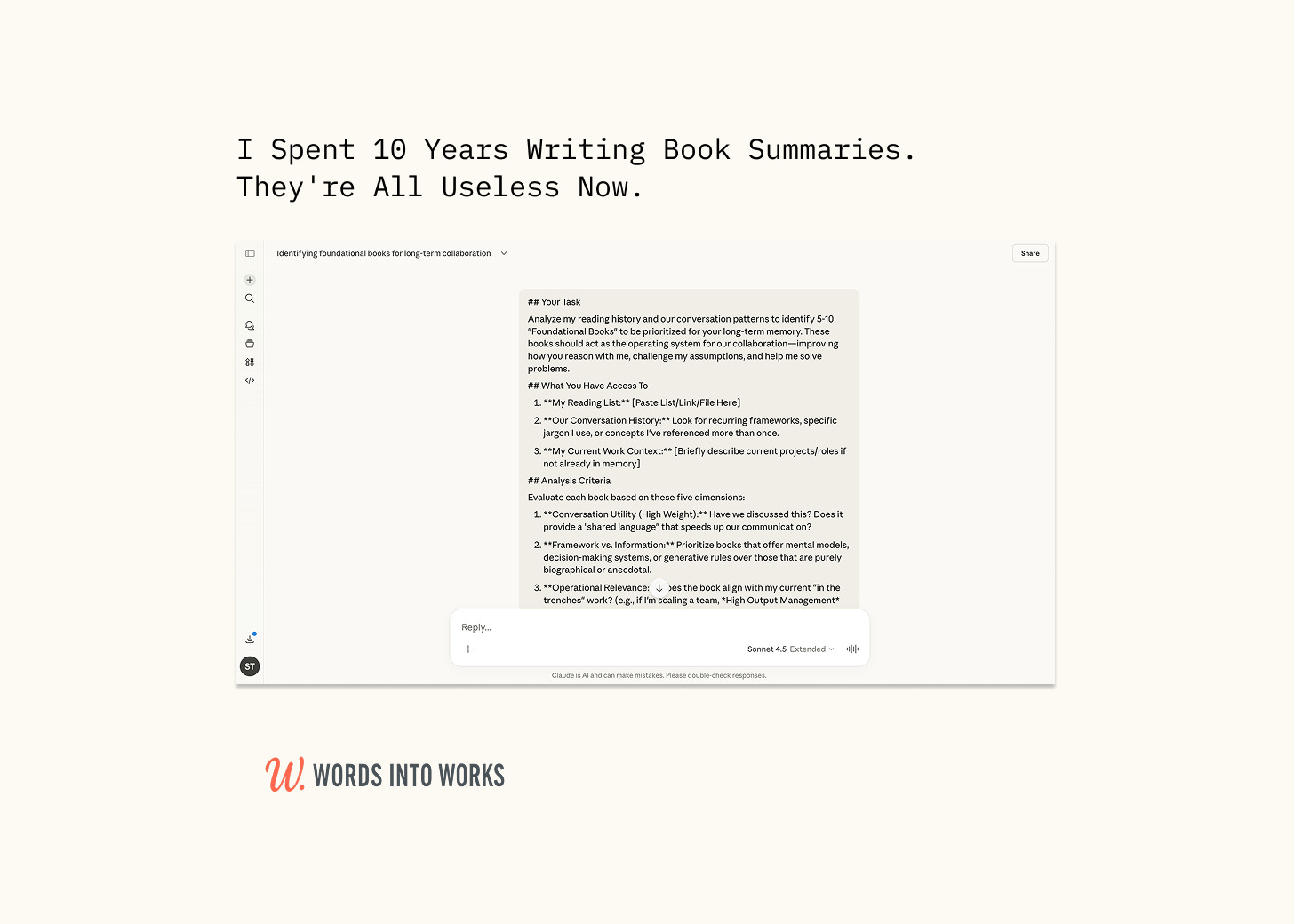
I turned extended thinking on and watched Claude work.
Mid-response, the reasoning window showed it pulling in a conversation from three weeks earlier—a framework I’d mentioned once, now surfacing unprompted to inform the answer I was getting.
I hadn’t asked for that context.
Claude recognized the relevance anyway and brought it forward.
That’s when it hit me:
If Claude can surface old conversations this way, it can do the same with the nonfiction books I’ve read.
And that realization upended everything I’d built.
You see, I’ve been writing book summaries since 2015. I built a whole identity around it. “The book summary guy.” Two hundred summaries published on my blog. People wrote to thank me for making books accessible, for doing the distillation work they didn’t have time for.
But I was solving the wrong problem.
The summary wasn’t the point. It was a workaround. A bridge between “I read this” and “I can access this when I need it.” I built the summary as infrastructure for a memory problem that just became obsolete.
The craft I built my name on just became obsolete.
The Summary Was a Workaround for a Problem That Just Disappeared
Here’s how we used to read books:
Finish one, export highlights, spend an hour turning them into a summary. Five key takeaways, the core framework, a few quotes. Then file it away.
I built that summary to be the bridge. A reference layer I could search when I needed the idea six months later.
In practice, I almost never searched it. By the time I needed Thinking, Fast and Slow, for example, I’d forgotten I had notes on it.
That retrieval problem just disappeared. Now you can read a book, export your highlights, and paste them into Claude with one instruction:
“Please remember these ideas from [Book Title] and reference them when relevant topics come up.”
The highlights become active context, traveling with you, not filed away. No summary. Just the raw highlights, ready to surface when you need them.
In practice? Six months from now, you’re in a tough conversation with a stakeholder. You don’t remember which book had the framework you need.
But Claude does.
You Can’t Feed Claude Every Book You’ve Read (And You Shouldn’t)
That raises an immediate question: which books?
You only want the ones with value for your future thinking. The ones you actually want Claude to reference when the moment comes up.
I needed a way to filter my reading list, so I decided to test a prompt. I connected Claude to my Notion Reading List, containing every book I’ve finished since 2021.
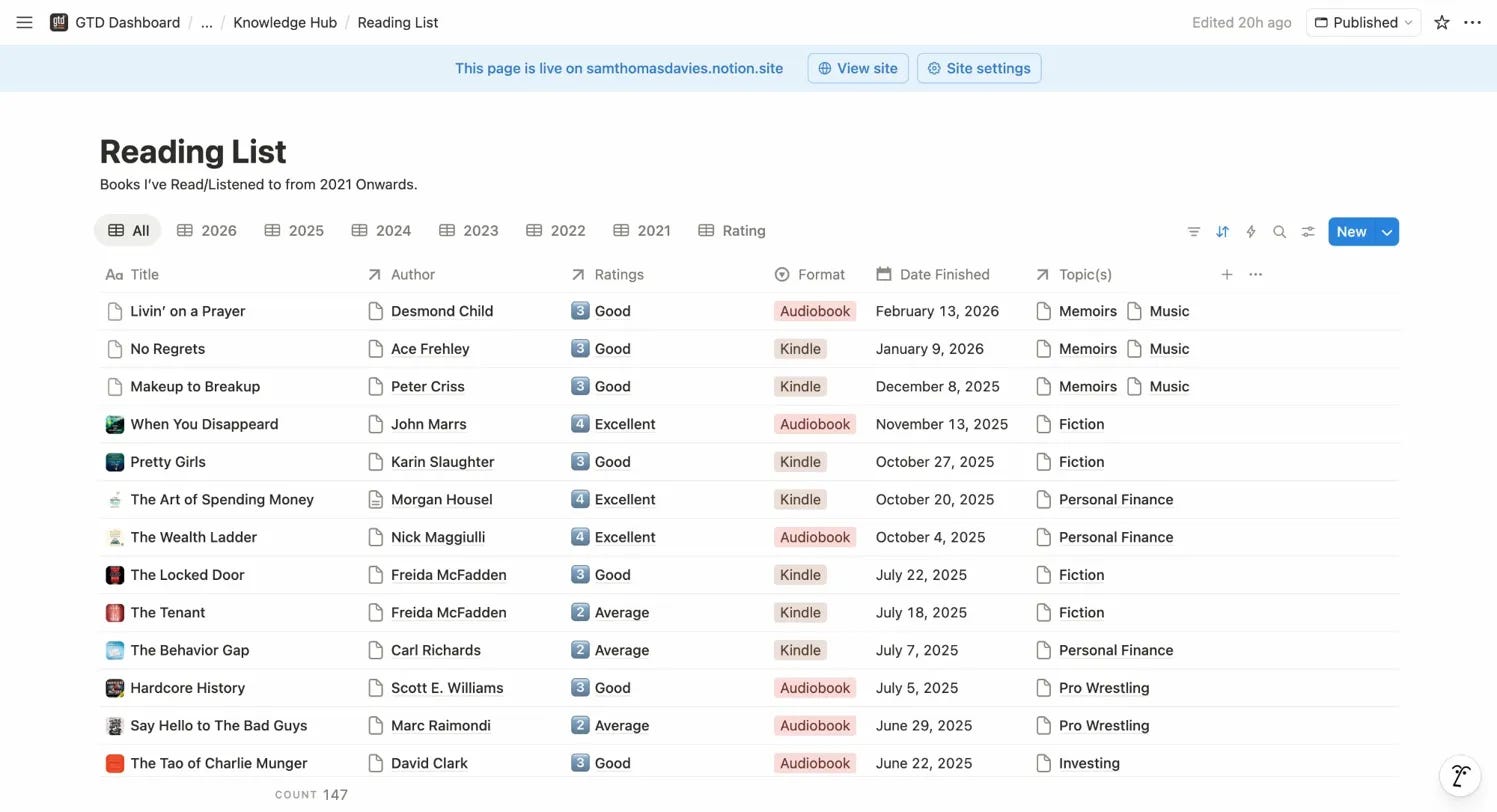
Then I ran the prompt.
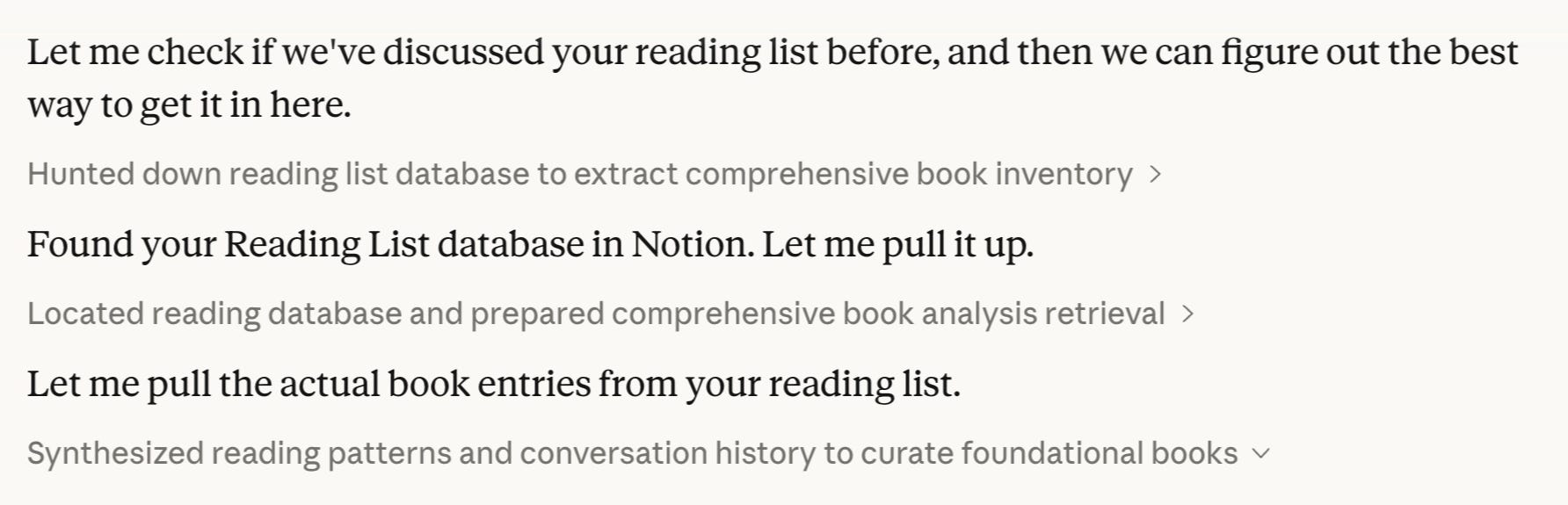
Claude returned nine books, organized into clusters. Switch, The Dip, Positioning. Books I’d referenced in conversations without realizing the pattern.
But the exclusions surprised me more.
Getting Things Done didn’t make the cut, as I already live in a GTD system. Claude called it “water I swim in.”
The prompt also filtered out books I’d rated 5 stars as “high rating, low utility.” That’s when the pattern became clear: The test isn’t “did I get it?” It’s “did I use it?”
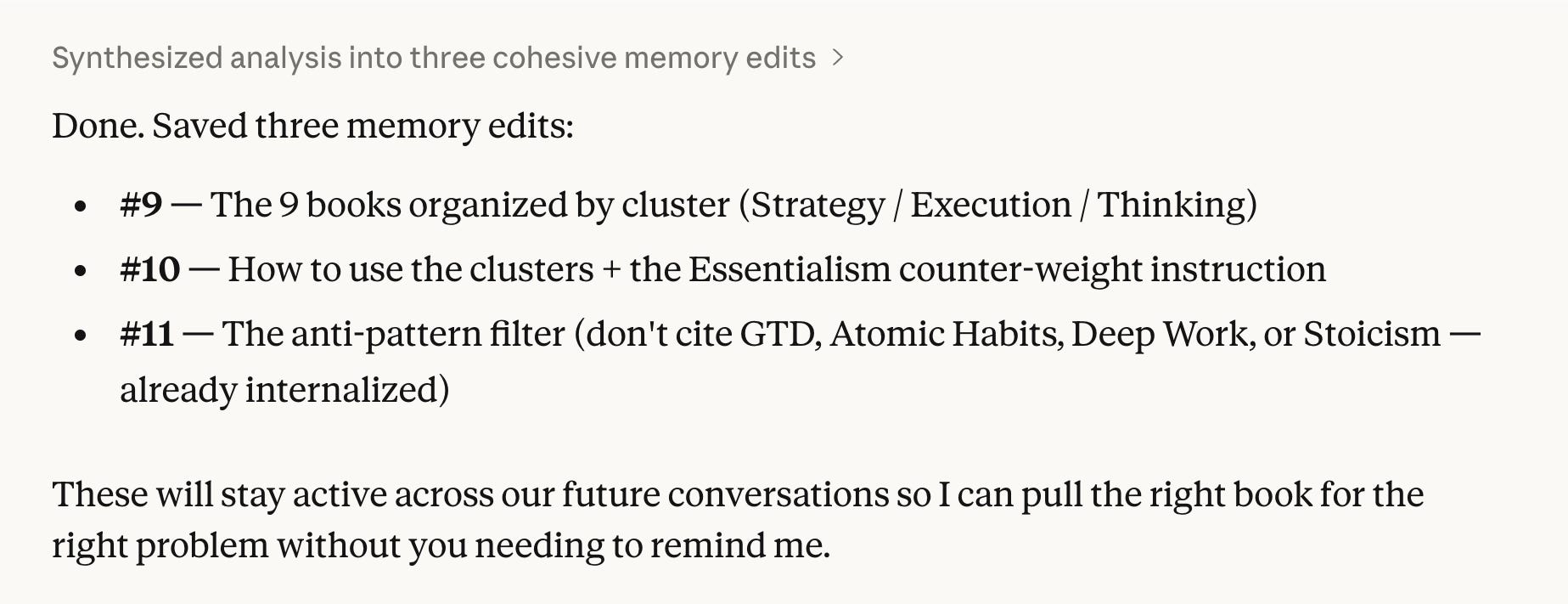
Once you get the list, save it to Claude’s memory. (And if you want to go deeper? Feed in your actual highlights from those books.)
Here’s the prompt to filter your own reading list.
