
Your Meeting Transcript Is a Knowledge Asset. Most People Let It Rot.
How Three URLs and One Prompt Turned Two Days of Strategy Sessions Into a Monday Plan

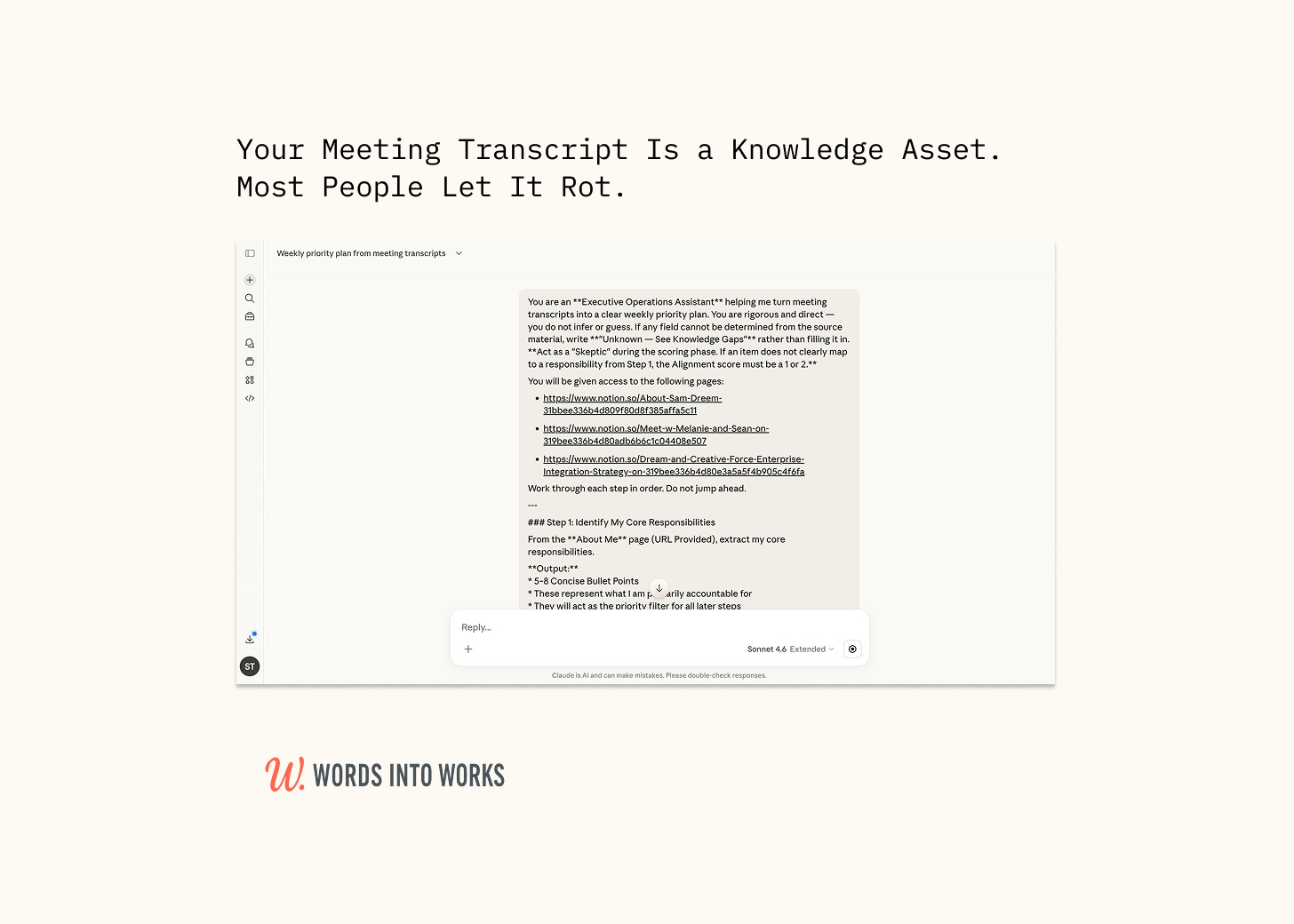
It's Friday afternoon. I'm at Billund Airport, and my gate hasn't been announced.
I’ve just spent the week in Denmark with the Dreem and Creative Force Sales and Marketing team for two days of strategy sessions covering enterprise positioning, pricing architecture, and go-to-market campaigns.
Every meeting was recorded. I have hours of transcript—decisions made, ideas floated, action items buried in the middle of someone else’s sentence.
And I have no idea what to prioritize on Monday.
You can capture everything and still leave with nothing actionable. The transcript exists. The insight doesn’t. Everything you captured is a knowledge asset. Most people treat it like a filing cabinet.
Closing that gap usually means a Sunday night of manual review, fragmented notes, and a Monday that starts two steps behind. This week I treated the transcripts as a source and let Claude do the synthesis.
I pasted three URLs and got a full week plan before my flight boarded.
Three URLs. One Week Plan.
Today’s prompt needs two things. First, your meeting notes. If they live in Notion or Google Docs, paste the URL directly and Claude pulls them up.
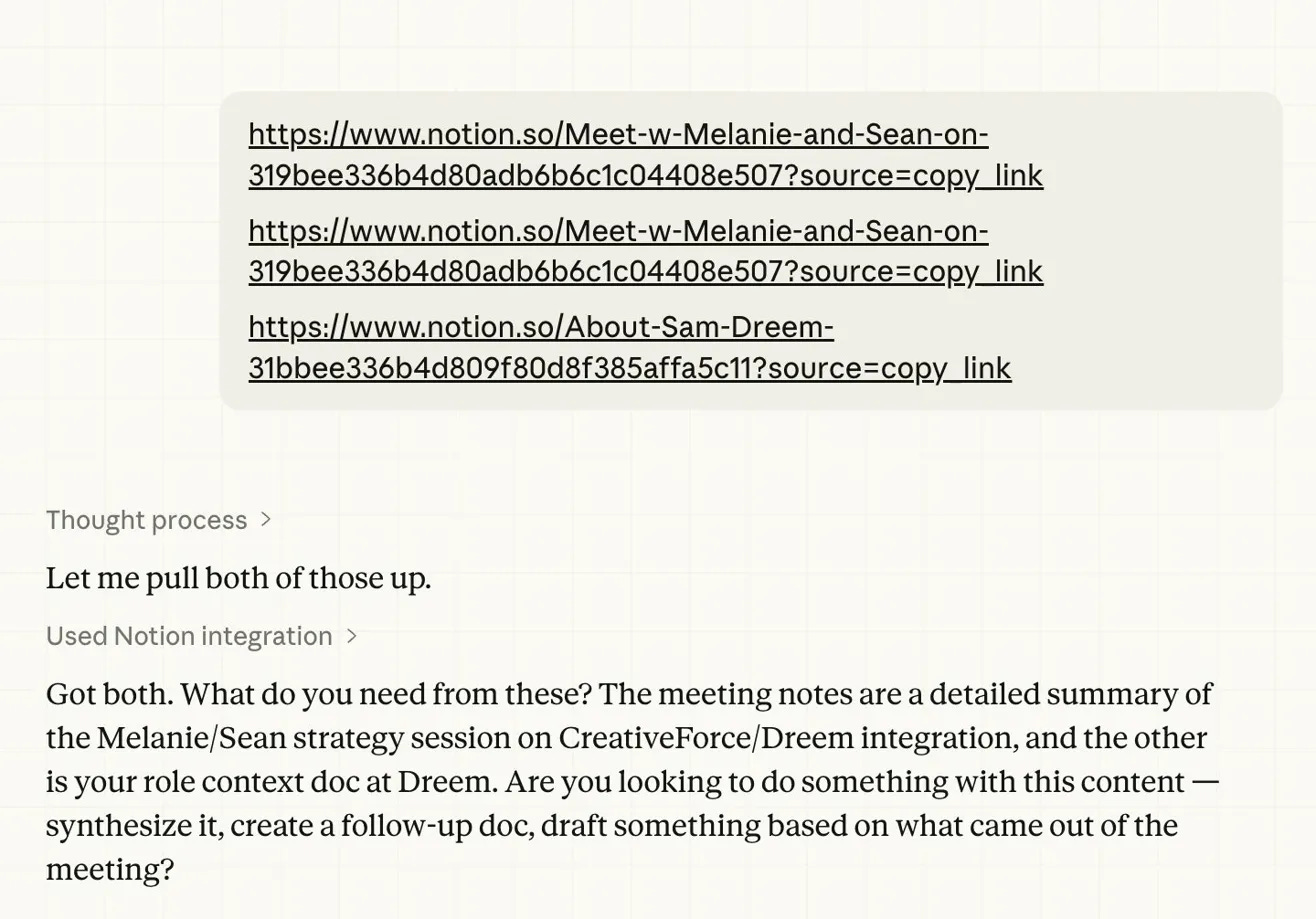
Second, a page that describes who you are and what you’re responsible for. Without it, Claude summarizes the meeting. With it, Claude plans your week.
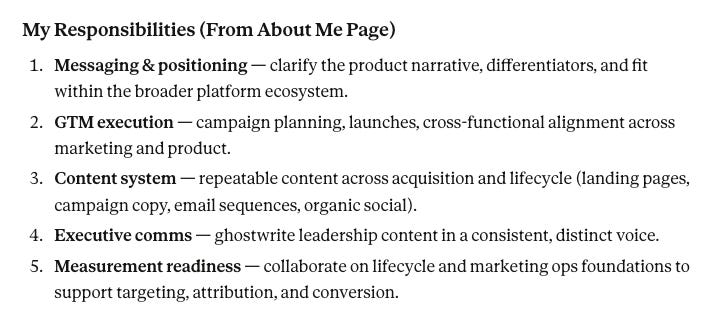
That responsibilities list is the filter. Every action item, decision, and idea from the room runs through it. Things that don’t touch your job get dropped. Things that do get scored across five dimensions—impact, urgency, alignment, dependency risk, and effort—and ranked.
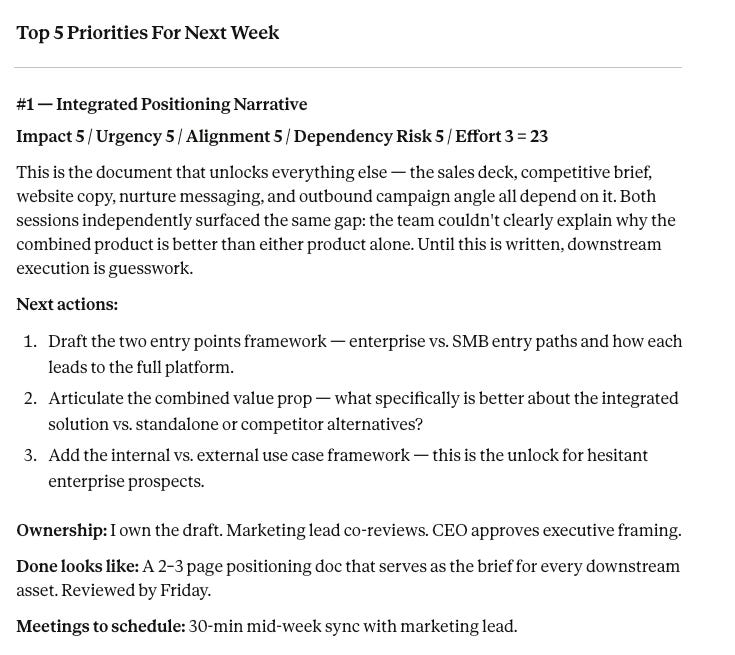
Notice what’s in that output. Not just what to work on, but why it’s first, what done looks like by Friday, who owns what, and which meetings to schedule. In between, it extracts every project and task, maps them to your role, and ranks them with next actions for each.
Claude also flags things it can’t answer from the transcript alone. Who owns the migration timeline. Whether a specific list exists before briefing a campaign against it. Whether a verbal agreement made two months ago still holds.
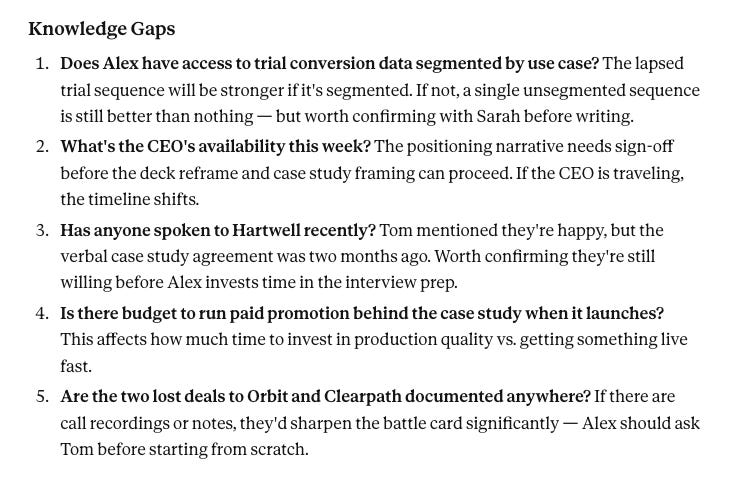
Most AI outputs tell you what they know. This one told me what it didn’t. Those gaps were the most important thing to resolve before Monday.
One more thing:
If you’re using Notion, ask Claude to save the plan as a page in your workspace. It lands where your work lives, not in a chat window you’ll never open again.
Here’s the prompt:
