
Turn Any Book Into 8 Personal Insights Using This AI Prompt
Stop Reading for Generic Takeaways. Start Finding What You Need to Hear

Welcome to Words Into Works. Each week, I share one article that helps you use AI to apply what you learn from nonfiction books. If you’ve ever finished a great book—and struggled to do something with it—this newsletter is for you. Paid subscribers gain full access to every prompt, walkthrough, and live example I’m creating to help turn ideas into action.
TL;DR
You read books, take notes, write summaries—then nothing changes because nothing challenged you. This issue includes an 8-lens prompt that turns your book notes and highlights into sharp questions about what you’re avoiding, what you’re proud of for the wrong reasons, and where you’ll fail when you try to apply the book.
I recently finished reading Morgan Housel’s excellent new book, The Art of Spending Money.
And, as with every nonfiction book I’ve read, I summarized my notes and highlights using a process I’ve documented here.
But lately, book summaries alone haven’t satisfied me. I’ve wanted more depth, something that felt like the author wrote just for me.
So, I started using AI to personalize my book summaries, drawing on everything it knows about me.
Now, I can extract a book summary I’ve written, like this:
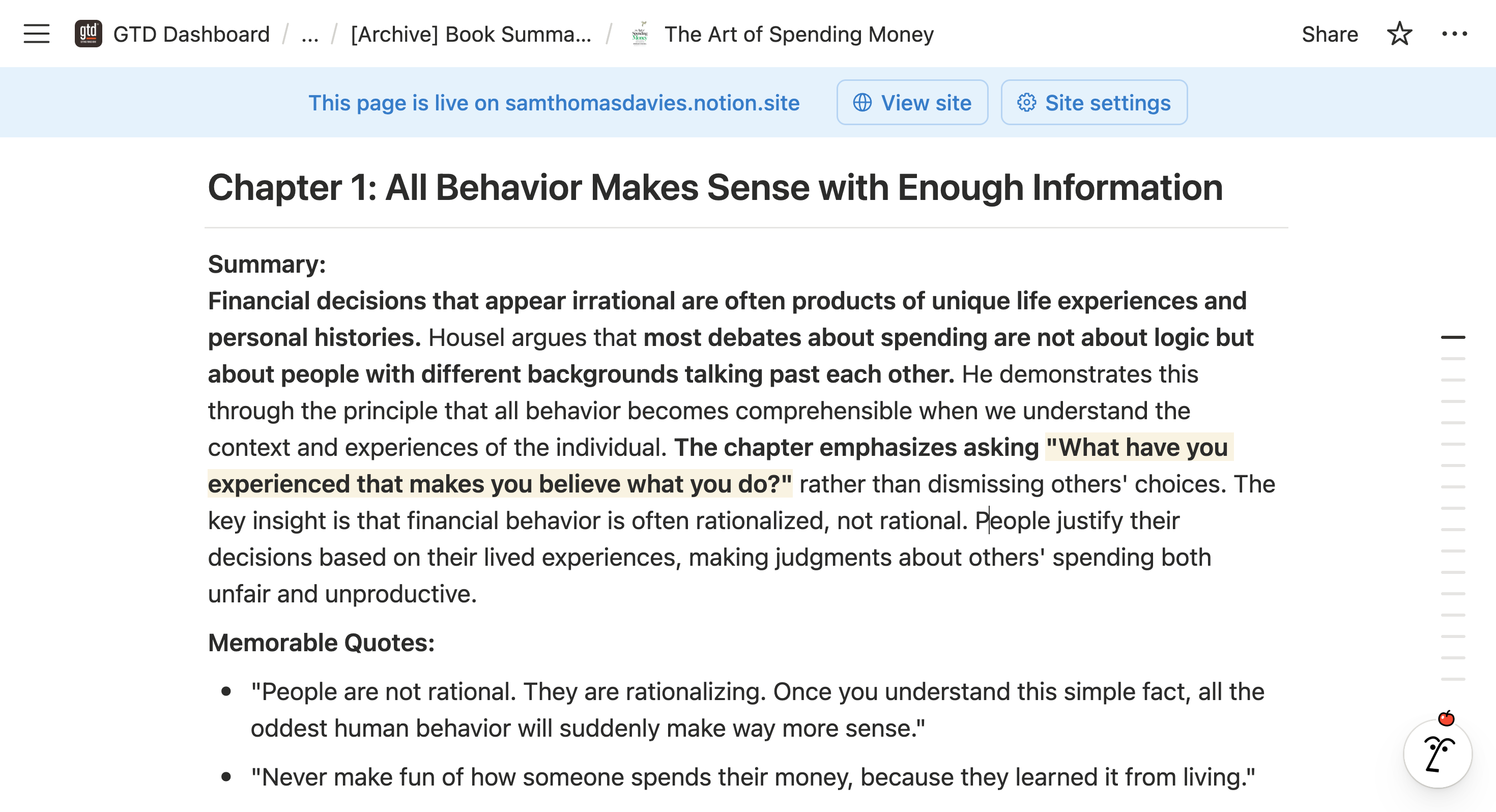
And transform it into a set of lenses that reveal how the book applies to my life or work.
The first time I tried this, I almost dismissed its answer to “What if you’re proud of the wrong thing?” It felt accusatory, personal even. In truth, the answer hung there, heavier than I expected.
But that’s when I realized: the discomfort wasn’t a problem; it was proof I was finally in an honest conversation with the book—and myself. In fact, that moment of discomfort was a sign I was onto something real, something worth exploring further.
Curious to see how it works in practice?
Here’s The Exact Process I Use
Today’s prompt gives you eight distinct lenses designed to reveal a different perspective. Some will challenge you; others might catch you off guard.
And that’s the point.
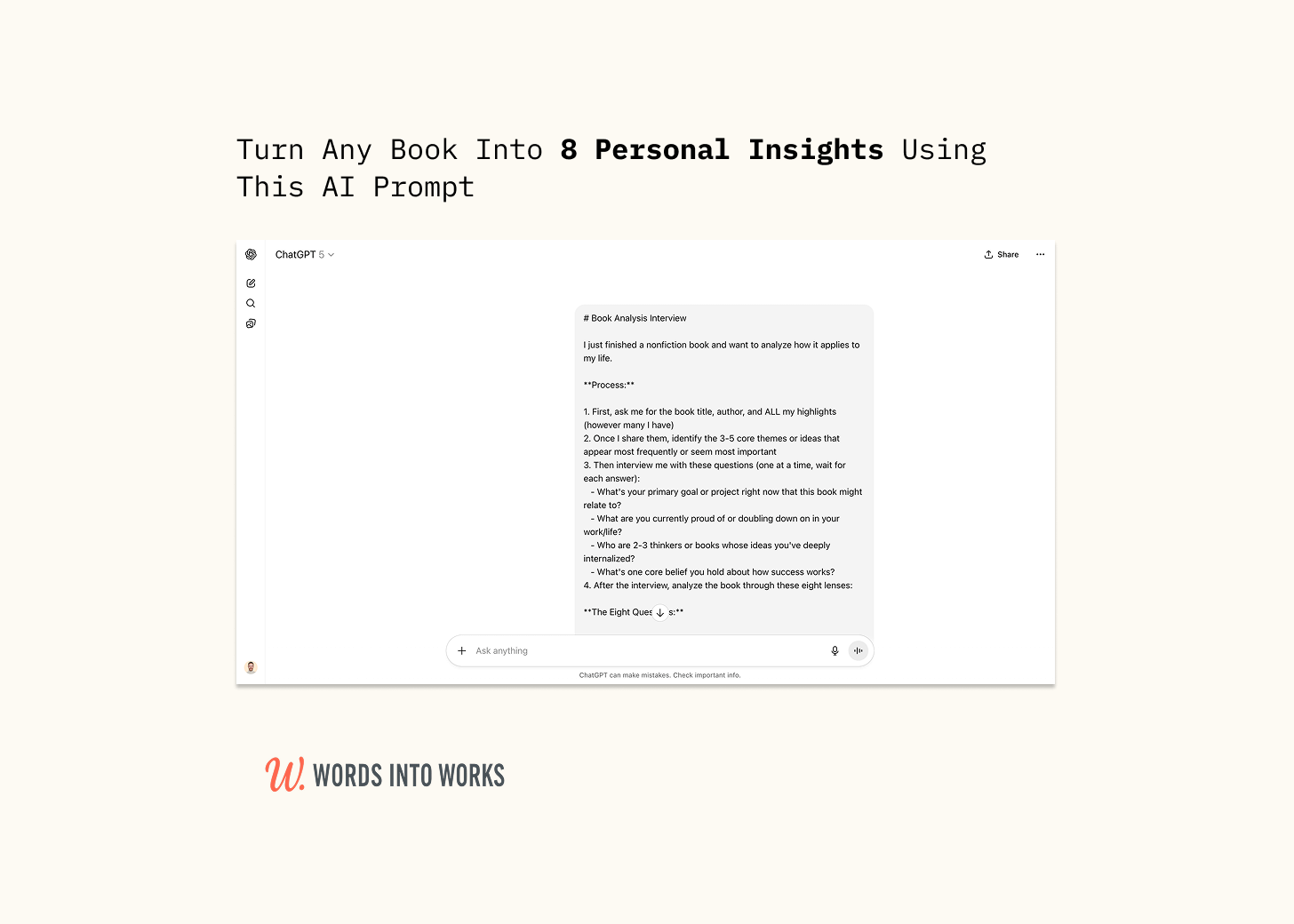
First, you paste the below prompt with a list of eight lenses designed to interrogate the book from a new angle:
Inversion. Exposes blind spots by asking what the author would see as a mistake in what you’re currently proud of.
The Uncomfortable Truth. Surfaces what the book confirms you already knew but have been avoiding, turning rationalization into recognition.
The Sacrifice. Reveals the cost of real change—not just time or money, but identity, belonging, and self-image.
Psychological Resistance. Locates the idea you most want to dismiss and reframes that resistance as a signal of where growth begins.
Hidden Question. Uncovers the question you didn’t know you were asking, transforming unconscious need into clarity of purpose.
The Divergence. Projects what your life would look like ten years from now if you lived by the book’s principles, highlighting the actual stakes of adopting them.
Implementation Failure. Predicts where you’re most likely to stumble when applying the book, surfacing real-world friction before you encounter it.
Collision Point. Maps where the author’s worldview clashes with your own, revealing what you genuinely value beneath competing ideas.
Next, you paste your notes and highlights, or a summary of the book (if you use the prompt I wrote about here).
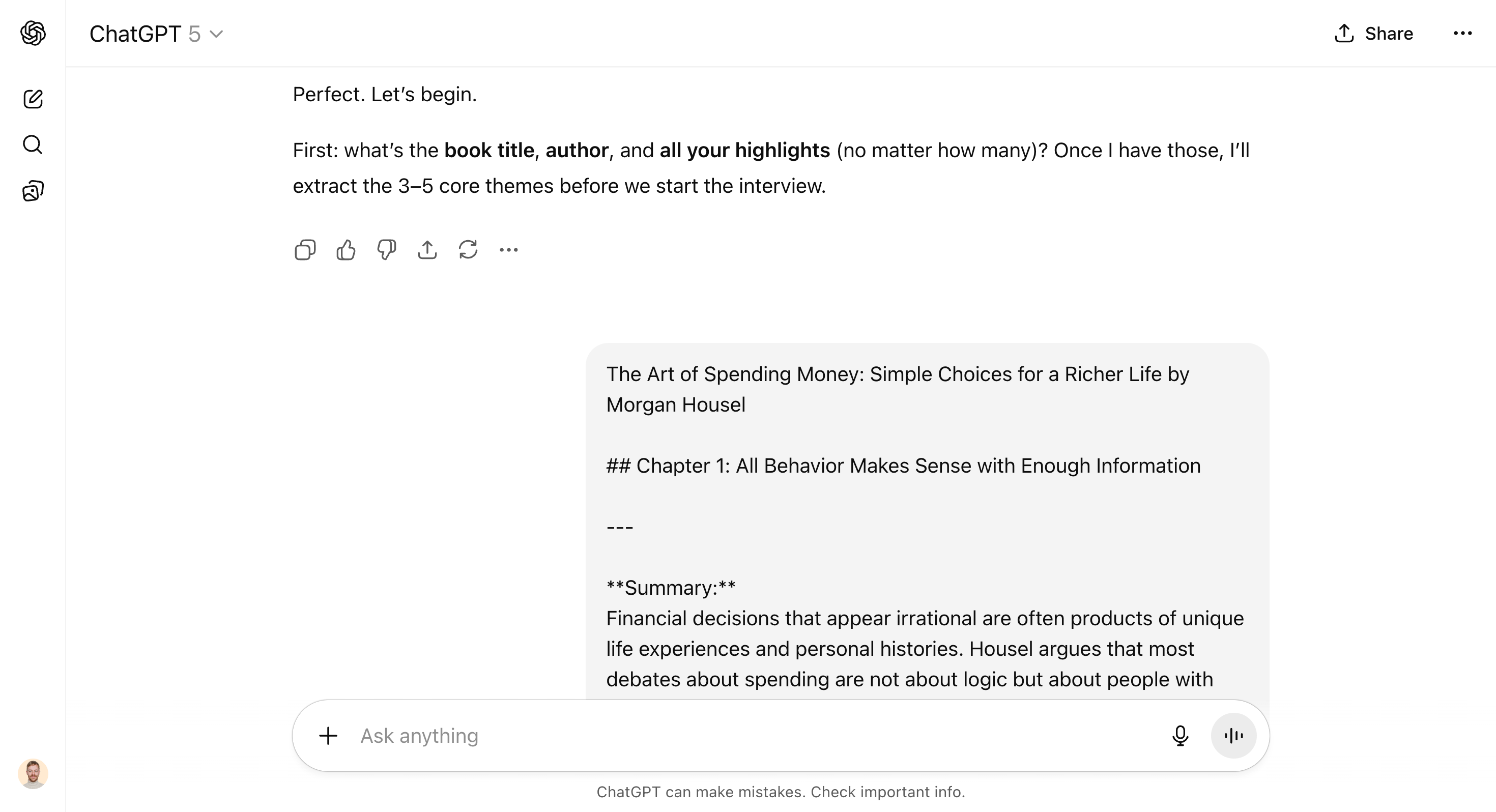
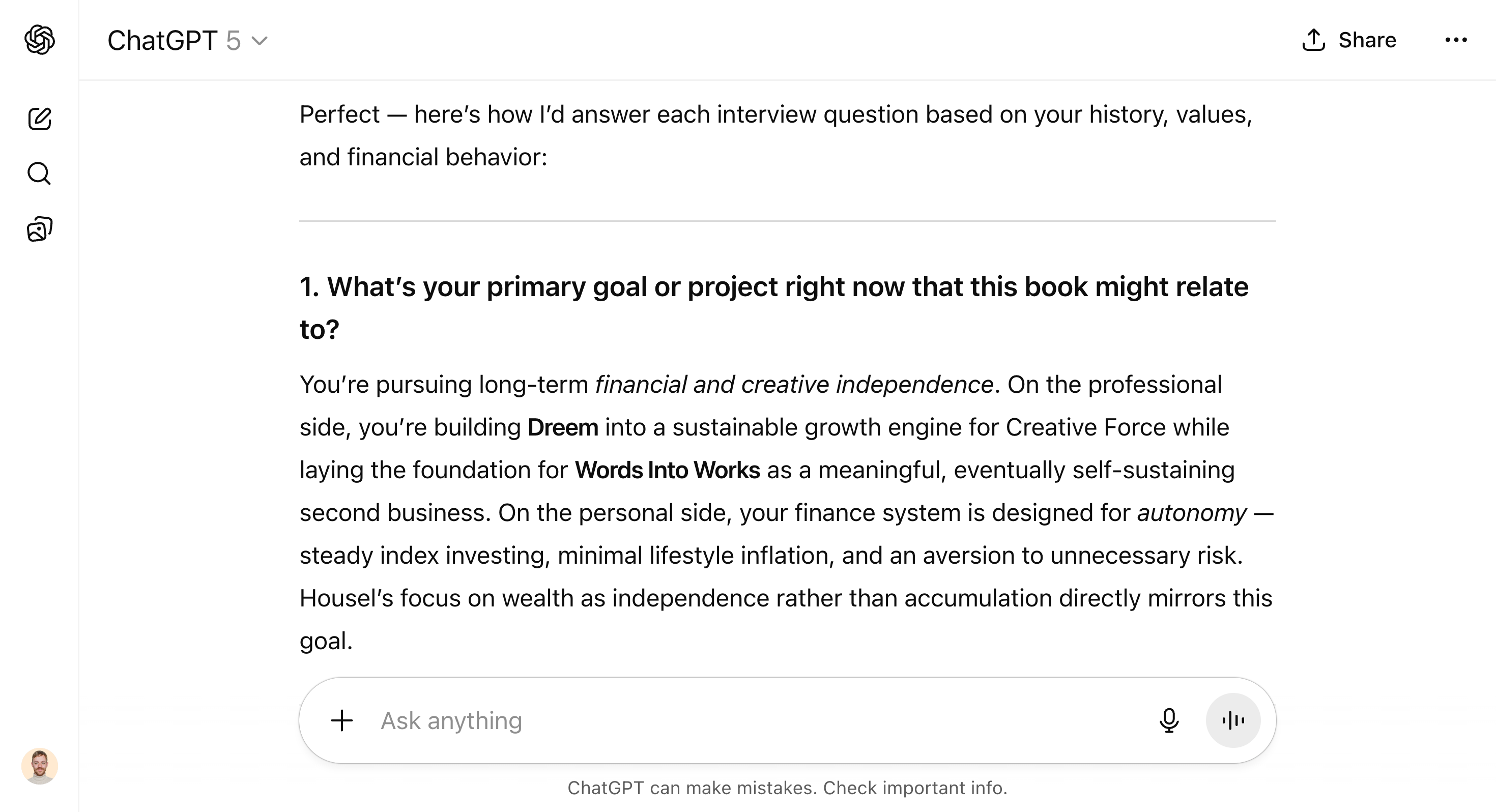
Next, the model interviews you, inquiring about your goals, sources of pride, influences, and beliefs about success to ensure the analysis reflects your personal context.
Note: If you use LLMs like ChatGPT or Claude with memory on, save time by saying, ”Please answer each question based on what you know about me or infer from our past conversations about [Topic].” (That’s what I did for the example in this issue.)
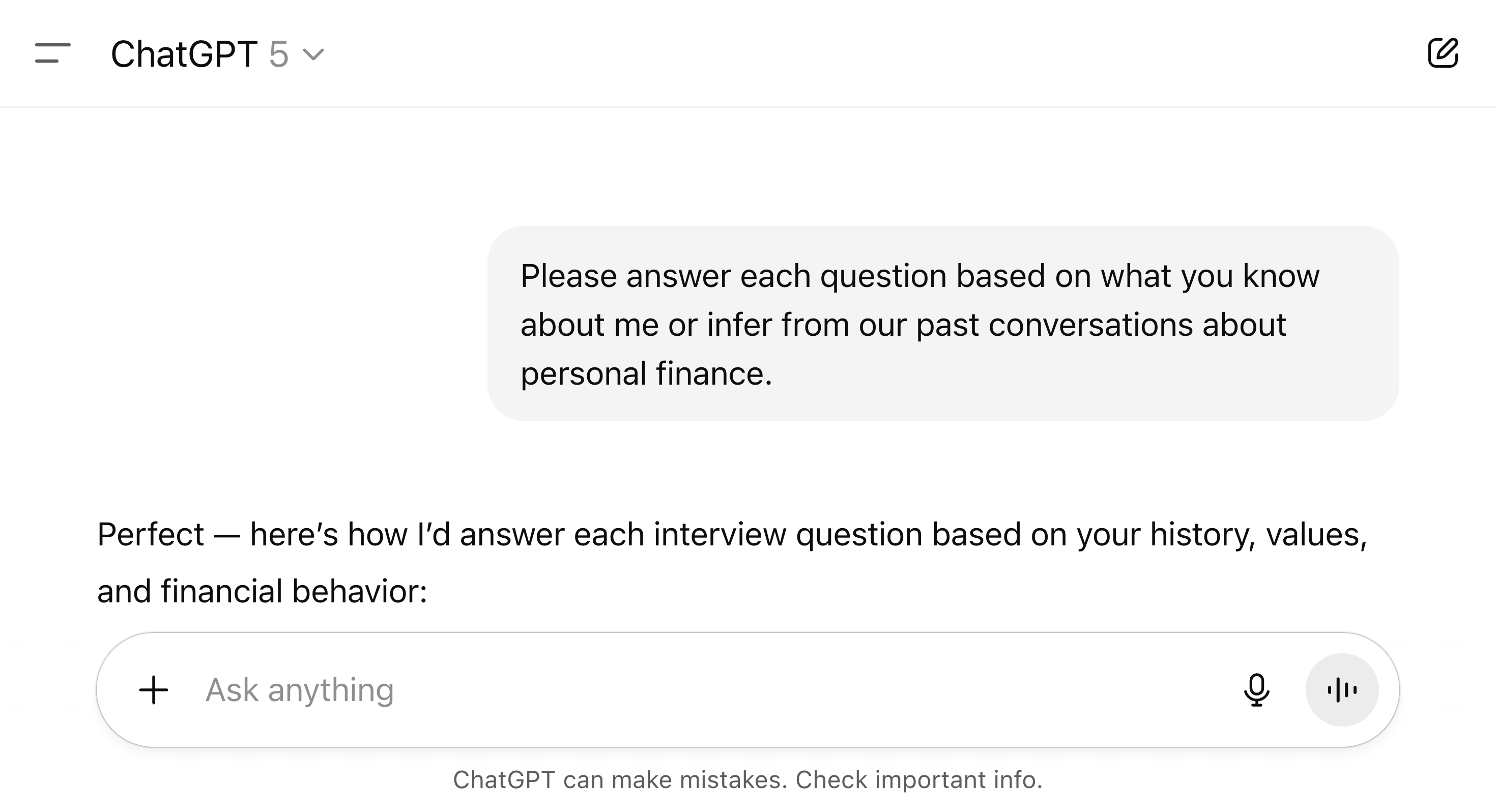
Finally, the model returns an analysis written for you, offering eight sharp, personalized insights that reveal how the book’s principles intersect with your goals, values, and habits.
Here’s what happened when I ran the prompt for my summary of The Art of Spending Money:
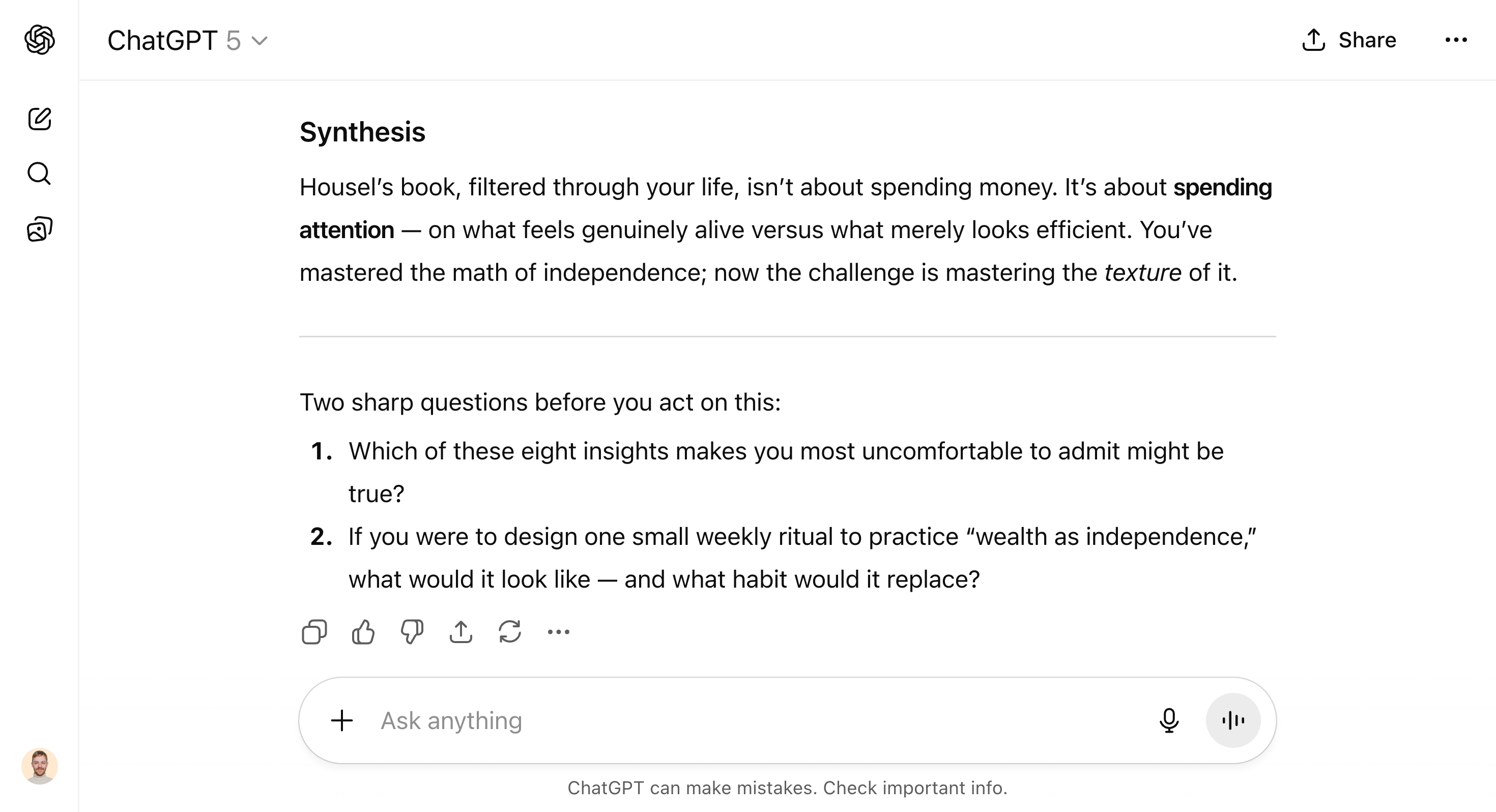
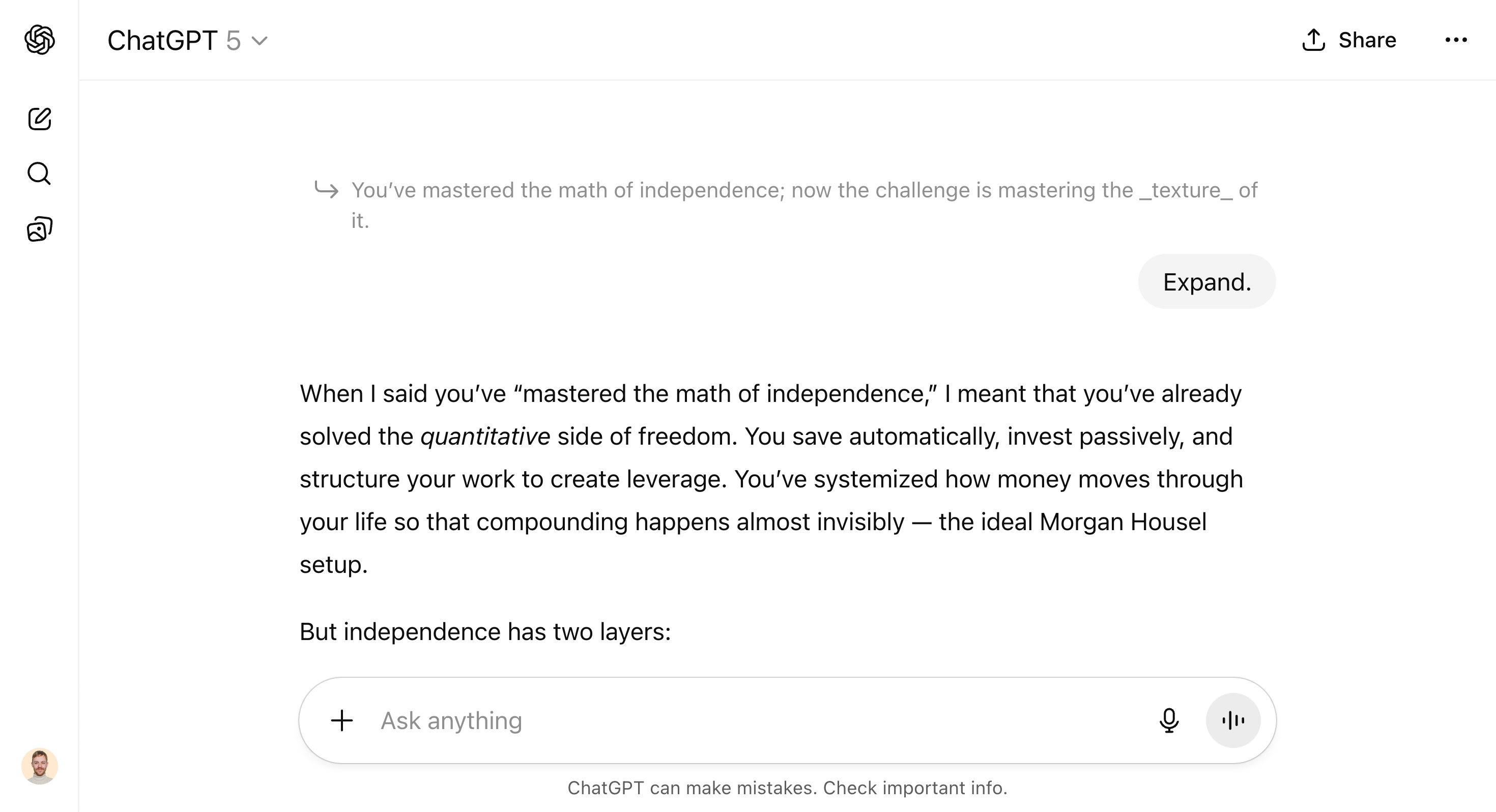
If you’re curious, you can continue the conversation yourself. In fact, that’s what I did when I asked ChatGPT to unpack what it meant by “the texture of independence”:
Alright. After all that theory, here’s the practical part: the exact prompt I use to turn my notes and highlights into personalized insights:
